The Most Asked Questions About Benin...
- Jordan Freeman
- Jul 7, 2023
- 5 min read

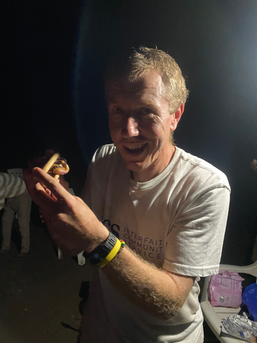
Bonjour! I hope everyone had a good 4th of July celebration. I personally just got back to my house the other day from visiting another volunteer who had a little 4th of July celebration. We got to share a little bit about how we celebrate our independence day with some of the local people in his village by cooking some hotdogs and s’mores over a big bonfire. Someone created a 4th of July play list, and of course there was a lot of dancing. Daniel had his very first s'more! And we passed the foodball around. Overall super fun experience!






Today I wanted to write a bit about Beninese culture. I always get so many questions from friends and family about daily life in Benin, so I decided to talk about a few different aspects in todays blog. Not to be cliché, but one of the three Peace Corps goals is “To help promote a better understanding of other peoples on the part of Americans”. So that is what we are going to do! I have picked a few topics that I will be talking about, but keep in mind that I am only sharing a small part of these large topics. I plan on continuing to share about Beninese culture in my next blog as well.
HISTORY OF BENIN
Benin is a country located in West Africa in-between Togo and Nigeria. Benin used to be known as Dahomey before it changed its name in 1990. The French colonized Benin from 1872-1960. Benin gained their independence from France on August 1st 1960. The national language in Benin is still French, but there are about 55 local languages that are spoken throughout the country. Many people in Benin speak more than 1 local language if they come from a family with multiple different backgrounds. I am learning the local language called FON. Fon is the most widely spoken local language in Benin. Some of the other languages are called Bariba, Yoruba (Nigerian language), Gun, Adja and Mina. During the times of the transatlantic slave trade, Dahomey (now Benin) had one of the major ports for transporting slaves which is located in the city of Ouidah. This is where “The Door of No Return” is located, a memorial arch to the enslaved Africans who were taken at that port. During these times, a group of female warriors formed to create one of the most powerful army’s in Dahomey (now Benin). These warriors were later known as Amazons. The Amazons were fierce soldiers who fought for the Kingdom of Dahomey, and because of their importance in Benin’s history, a statue was created in their honor. The statue is located in the capital city, Cotonou. Recently a movie called “The Woman King” came out about the Amazons of Dahomey. I highly suggest watching it, possibly on Netflix.





RELIGION IN BENIN
Benin has a diverse religious culture. Before the influence of western culture, the main religion that was practiced in Benin was Vodoun. Actually, Vodoun originated from the Kingdom of Dahomey. In Benin, the city of Ouidah is the most highly populated place of people practicing Vodoun. Every year Ouidah is the place to go for Vodoun celebrations such as on January 10th, the national “Fête du Vodoun”. Many of these celebrations are held in sacred forests that are spread throughout the country. One of the biggest aspect of Vodoun religion, that I have observed, is the fetish. The fetishes are normally statues believed to hold powerful spirts, and each fetish is believed to perform tasks according to its power. During festivals, you can witness the fetish walking around and dancing in these beautifully designed robes. Picture below. Along with Vodoun, Christianity and Muslim are the two other biggest religions in Benin. Christianity has many different branches present in Benin such as Catholic, Protestant, Evangelical, Jehovah’s Witnesses, and Celestial. Another time I will speak about the Celestial Church which was created in Benin. A large part of the population is Muslim especially in the north part of the country. The celebration of Tabaski, Muslim holiday, has just finished being celebrated, and I will share more about Muslim culture in Benin as I have more experiences. Overall the most amazing thing that I have experienced, in-terms of religion, here in Benin, is the non judgmental and acceptance of all religions. From what I have observed, there is no fighting, no fear and no harsh judgements towards any religions. Everyone tends to accept the decisions of others and honestly support others during their religious celebrations. Although not being religious is viewed as abnormal in Beninese culture because of the community aspect of religion and community mind set of Beninese people.


FOOD IN BENIN
Food in Benin is very different from the food in the United States, and a lot of that has to do with availability and production differences. Benin’s most important export product is cotton followed by cocoa, maize and seafood. As for food that people eat on a daily basis in village, most of that is grown in-country. Things like corn, cassava, tomatoes, onions, and spicy peppers are all grown throughout the country year round. Everyone here is a farmer. Even if you have a different job, most people have a small farm on the side or they work at a farm as a side gig. All farming is done by hand by both men and women, from what I have observed. Many food products come in and out of season here such as different fruits and vegetables. Benin also has lots of imported items such as cookies, pasta, oatmeal, powdered milk and much more.
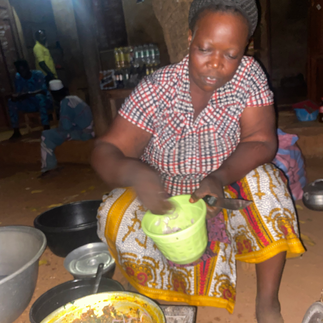
Now I am going to tell you about my favorite classic Beninese meal. It's called “sauce legume”. Normally a classic Beninese meal is made up of a carb (corn, cassava or yams) and a sauce with some type of protein in it. This carb is traditionally crushed and grinned into a flour. Then that flour is added to water and cooked to make a paste. For this meal I would have “la pâte” (French word) or “Wu” (Fon word) which is corn based. Now for the sauce, “sauce legume” is made out of tomato, onions, peppers, garlic, and ginger. All of these ingredients are crushed into a paste, and then added to a pot with oil to cook. Things like salt and flavoring cubes are also added. As for the “legume” part, dark leafy greens are washed and cut, and then added to the pot. Normally I also like to add fish to the sauce. After it is all done cooking, you add the “sauce legume” to a plate, and on another plate you will have your “pâte”. If you are eating with other people it is very normal to all eat off the same plate. After washing your hands, it is time to dig in. First you take a piece of the “pâte” with your hand, then some of the “sauce legume” to get the perfect bite. That’s it, that’s my favorite Beninese meal!


Personal Updates:
1. I have offically been living in Benin for over 1 year! A little suprised that I made it this far.
2. Bena is doing well, but her new thing is that she loves chasing chickens. So she stays on the leash most of the time. Although this morning she was running around like a loon with her boyfriend who lives down the street.
3. My hand washing project that I am hoping to start soon is in the final stages of approval.
4. Spending lots of time with my neighbors, especially the kids.
5. I bought a kindle when I was back in the states, and I love it! I'm currently reading the third Harry Potter!
6. Bena and I had a visit from a friend volunteer a few weeks ago!


Loved you last story about Benin cultur, food and religion. Your story about the women warriors reminded me I need to watch that movie. Thanks for sharing and teaching me about Benin